Options Trading Brokers in the USA: How to Choose One
To choose between options trading brokers in the USA, compare five things: the options approval levels they will grant you, the per-contract and exercise fees, how well the platform handles multi-leg orders, the quality of its options chain and risk tools, and whether it offers an API that automation platforms can connect to. US brokers are regulated by the SEC and FINRA, so the differences are mostly cost, tools and access.
What an options broker does
An options broker gives you access to listed options on US stocks, ETFs and indices, and handles:
- Approval: deciding which strategies you may trade
- Order execution: single-leg and multi-leg orders routed to the options exchanges
- Margin: how much buying power each position ties up
- Exercise and assignment: processed through the Options Clearing Corporation when options expire or are exercised
- Tools: option chains, Greeks, probability estimates and position risk views
US brokers are regulated by the SEC and are members of FINRA. Before approving options trading, a broker must give you the options disclosure document, Characteristics and Risks of Standardized Options, and assess your experience and finances.
Options approval levels
Brokers group strategies into levels. The exact numbering varies by broker, but the order is broadly the same:
| Typical level | Strategies usually allowed | Typical account |
|---|---|---|
| Lowest | Covered calls, cash-secured puts | Cash or margin; often allowed in retirement accounts |
| Next | Buying calls and puts | Cash or margin |
| Higher | Spreads: credit and debit verticals, iron condors | Margin |
| Highest | Selling naked (uncovered) calls and puts | Margin, with more experience and capital |
How to compare options brokers
| Factor | What to check |
|---|---|
| Options approval | Which level they'll grant you, and in which account types |
| Per-contract fee | The fee on every contract opened and closed; check whether it is capped per leg |
| Exercise and assignment fees | Some brokers charge when an option is exercised or assigned |
| Index options fees | Extra exchange fees often apply to SPX and other index options |
| Multi-leg orders | Can you send a spread or iron condor as one order with one net price? |
| Platform tools | Option chain, Greeks, profit/loss graphs, alerts |
| Margin treatment | How much buying power spreads and short options use |
| API access | Needed for automation through a third-party platform |
| Support | How quickly you can reach someone during a problem trade |
Why per-contract fees add up
The more legs and the more often you trade, the more the fee schedule matters. For a buy-and-hold investor who sells one covered call a month, it barely matters at all.
Brokers that connect to Tradetron
Tradetron is not a broker. It sends orders to a broker you connect. For US options, Tradetron users connect Tastytrade, a broker built around options trading, with multi-leg order tickets and options analytics. Follow the Tastytrade connection tutorial to link it.
Beginner-friendly options strategies
Start with structures that have a known maximum loss and simple management.
- Covered call: own 100 shares and sell a call against them. You collect premium and give up gains above the strike.
- Cash-secured put: sell a put while holding enough cash to buy the shares if assigned. A way to get paid while waiting to buy a stock at a lower price.
- Bull put credit spread: sell a put and buy a lower-strike put. Profits if the price stays above the short strike; loss capped by the bought put.
- Bear call credit spread: the mirror image above the market.
- Iron condor: a bull put spread plus a bear call spread, for range-bound markets.
- Long straddle or strangle: buy a call and a put for a big move either way; the premium paid is the maximum loss.
Example: a bull put credit spread on SPY
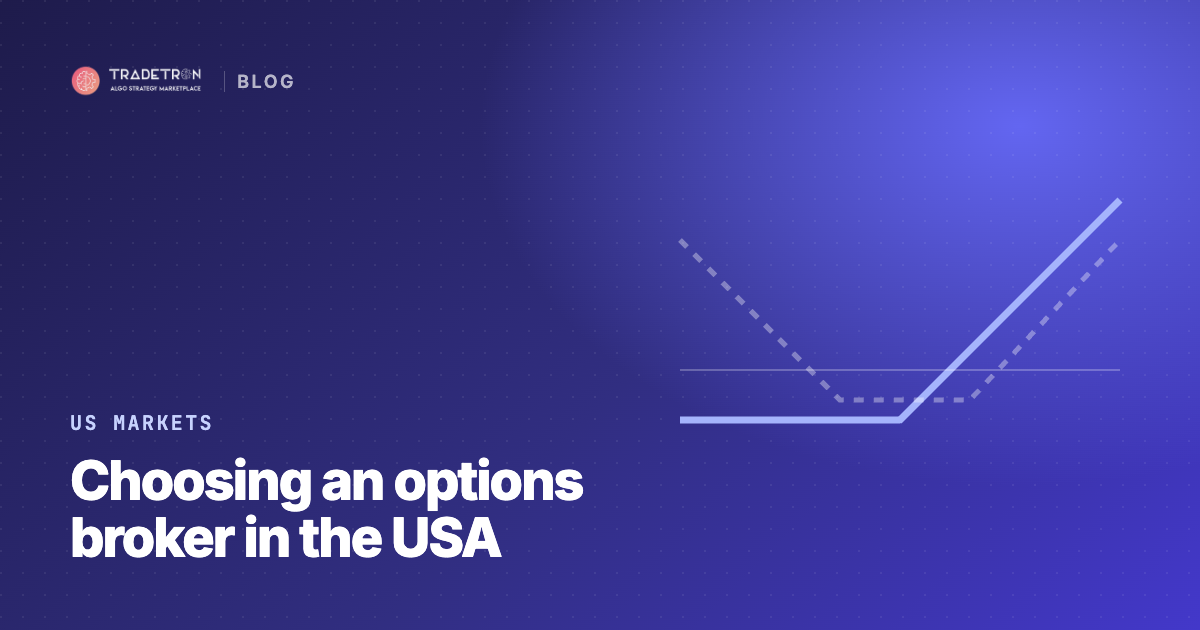
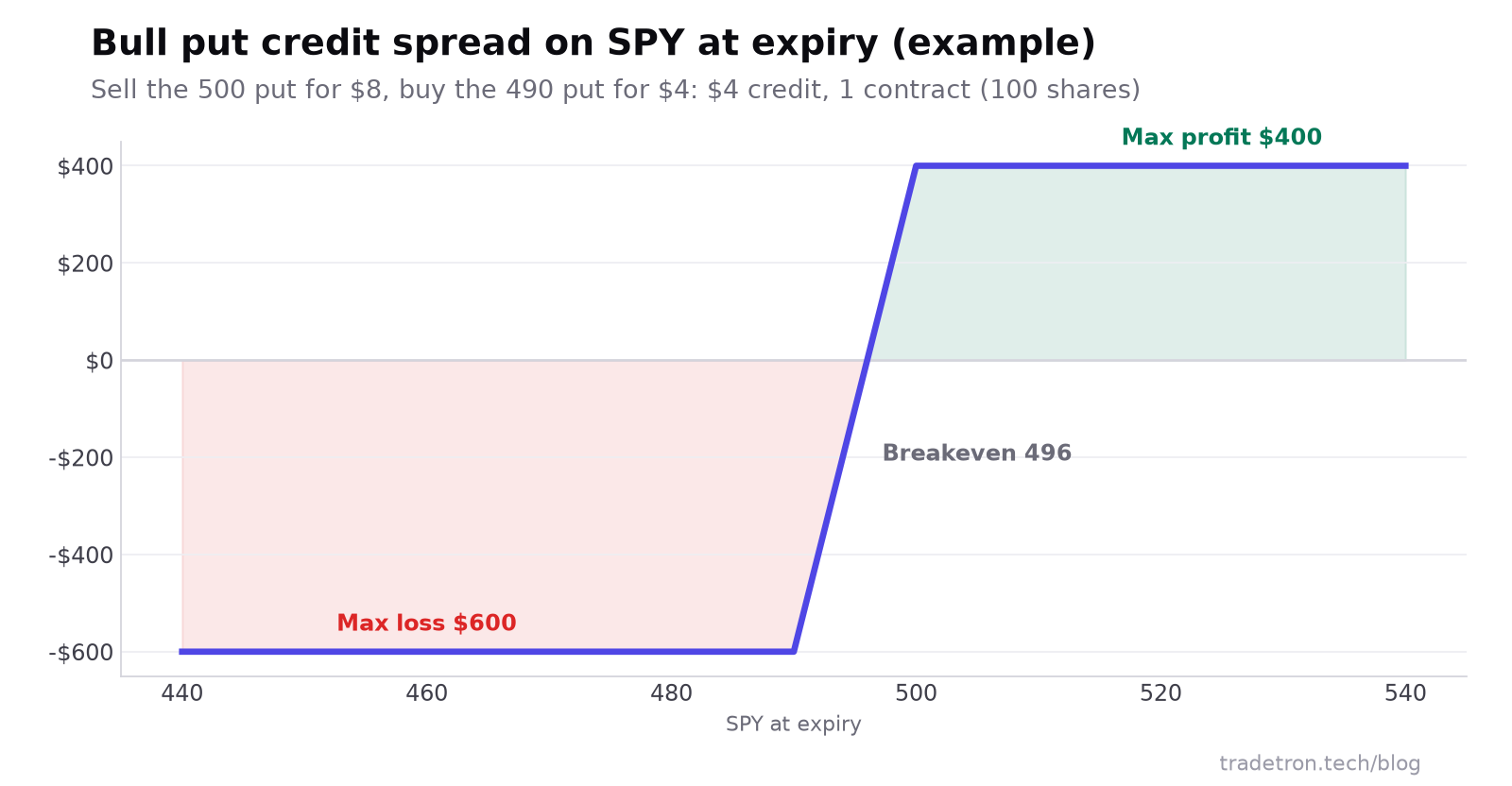 Bull put credit spread at expiry (example figures)
- $400 maximum profit: $4 credit × 100 shares
- $600 maximum loss: ($10 width − $4 credit) × 100
- 496 breakeven: short strike − credit
This structure needs the spreads approval level at most brokers, and the $600 maximum loss is what the broker will typically hold as margin.
Manual vs automated options trading
| Manual | Automated | |
|---|---|---|
| Entries and exits | When you are watching | When the rules say, every time |
| Multi-leg management | Leg by leg, by hand | All legs managed as one strategy |
| Stops | Easy to move or skip | Applied as written |
| Several strategies at once | Hard to track | Run in parallel |
| Risk | Human error and hesitation | A bad rule runs just as reliably as a good one |
For the strategy side, read how US traders automate options and what an index option contract is.
Frequently asked questions
What should I look for in an options broker?
The approval level they'll give you, per-contract and exercise fees, multi-leg order support, the quality of the option chain and risk tools, margin treatment for spreads, API access if you want to automate, and support you can reach during market hours.
What are options approval levels?
Brokers group strategies by risk and approve you for a level based on your experience and finances. Covered calls and cash-secured puts sit at the bottom, buying options next, spreads after that, and naked selling at the top.
Do I need a margin account to trade options?
Not for every strategy. Covered calls, cash-secured puts and buying options can usually be done in a cash account. Spreads and selling naked options generally require a margin account.
Are options trades commission-free?
Many brokers advertise commission-free stock trades but still charge a fee per options contract, plus exchange and regulatory fees. Check the full options fee schedule, including exercise, assignment and index option fees.
Which broker can I use with Tradetron for US options?
Tradetron users trading US options connect Tastytrade. Check the broker list in your Tradetron account for the current options.
Is automated options trading legal in the US?
Yes. Individuals can automate their own options trading through brokers that offer API access. You remain responsible for following your broker's rules and the rules that apply to your account.